DISTRICT 4 – TWIN PEAKS WEST
Balboa Terrace (4A)
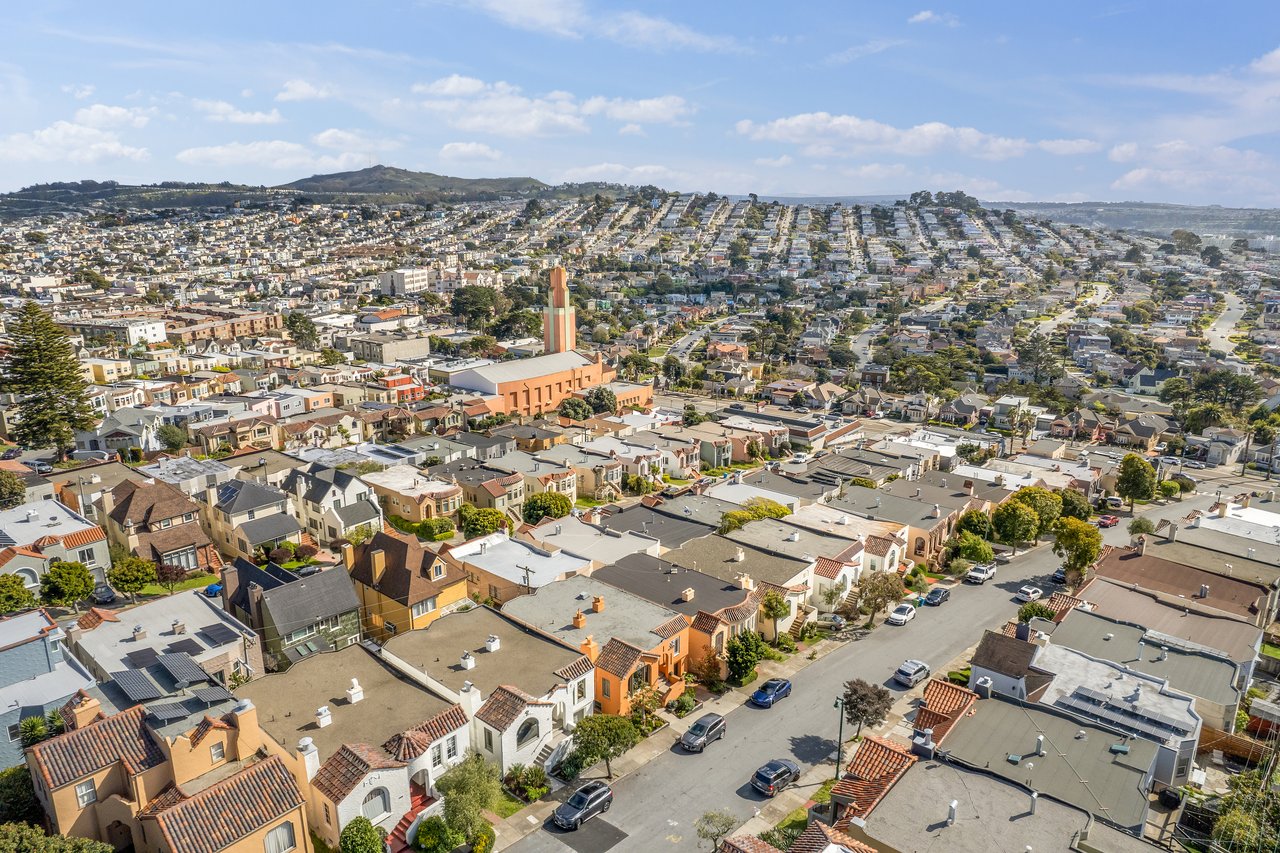
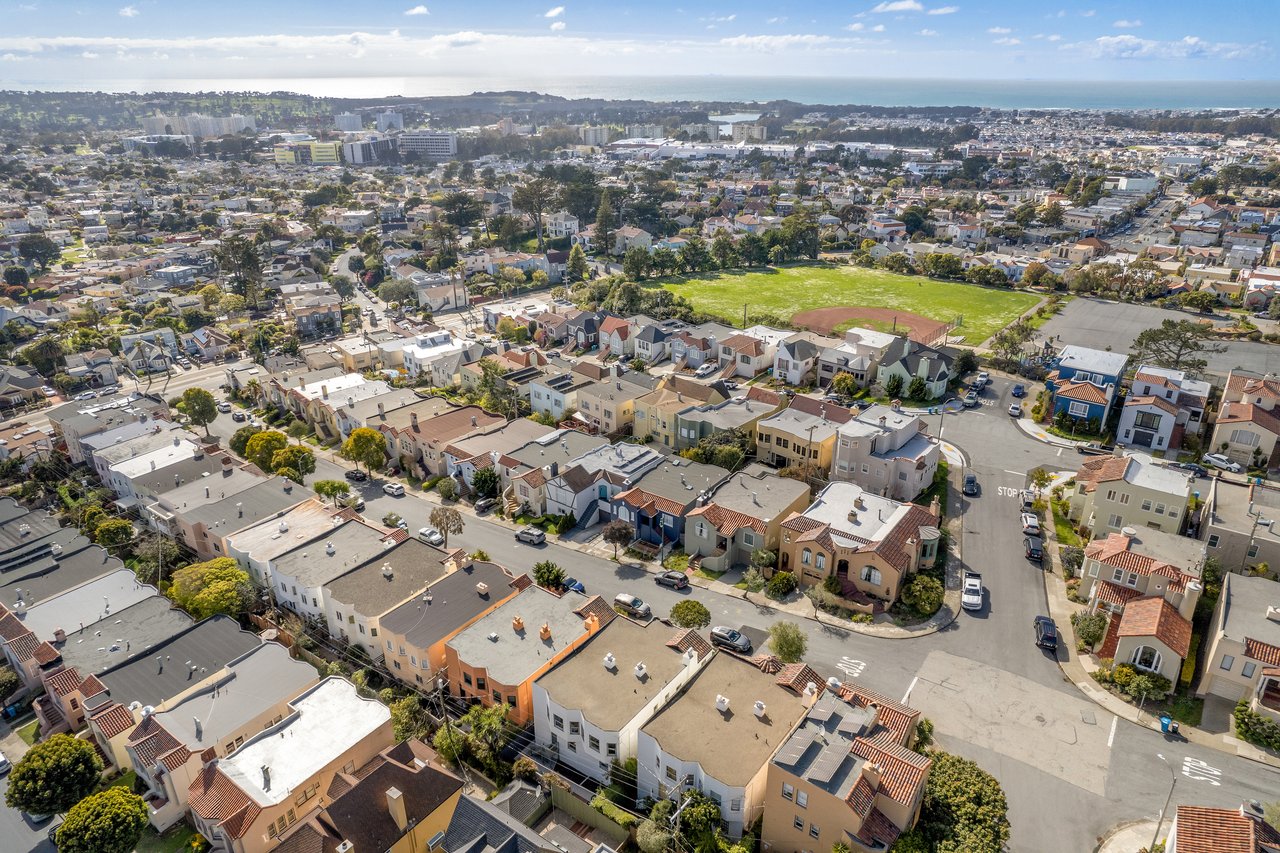
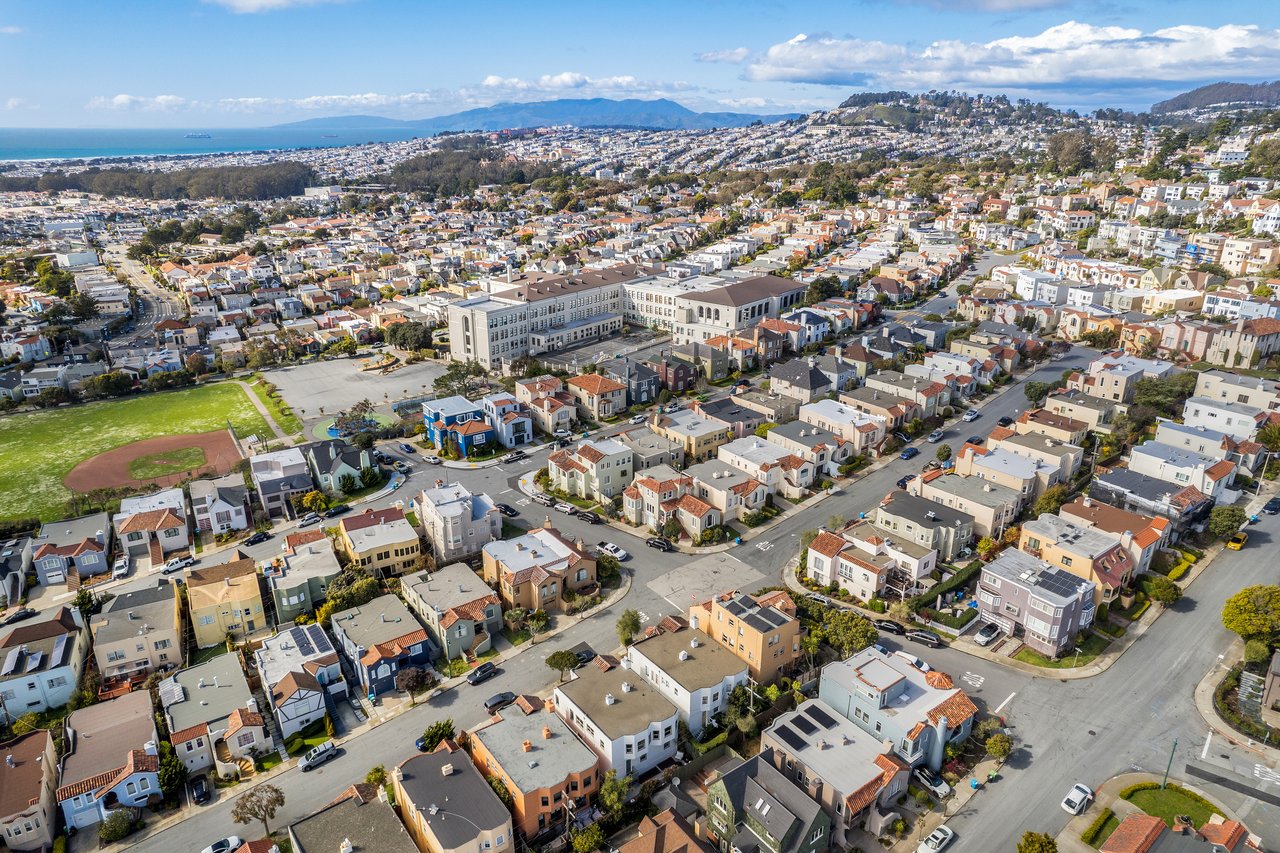
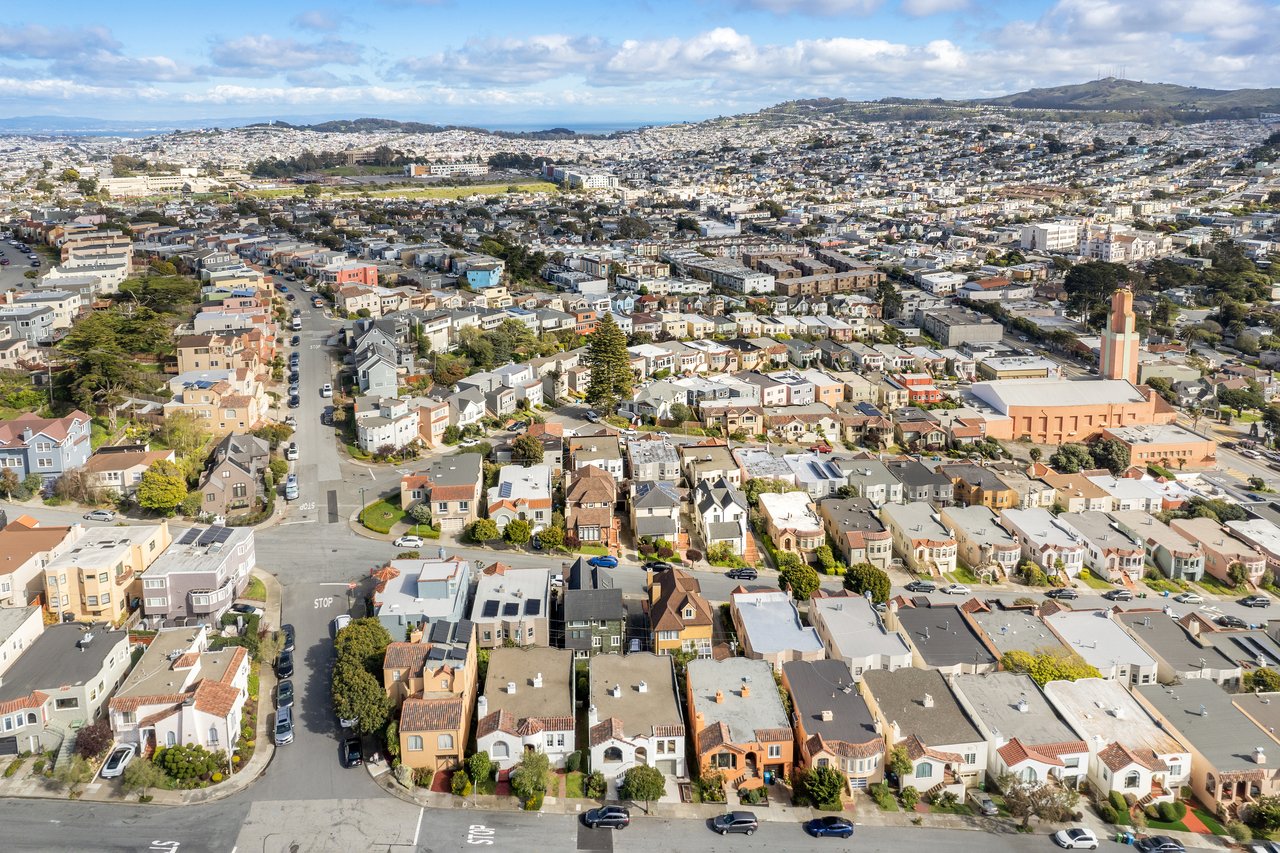
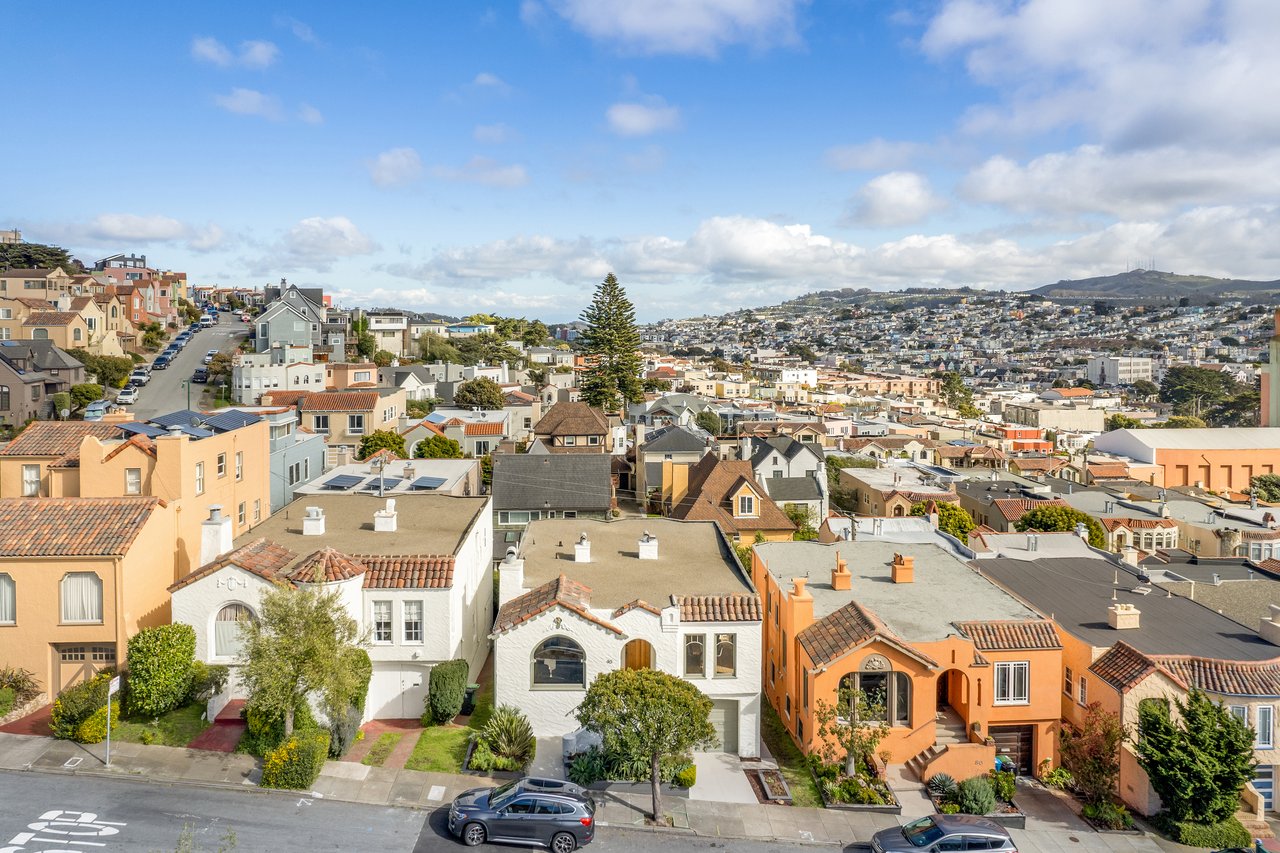
Balboa Terrace is a small, elegant residential enclave tucked between St. Francis Wood and Ingleside Terrace — two of the city's most prestigious planned communities. The neighborhood is characterized by gracious single-family homes on generous lots, mature street trees, and a peaceful atmosphere that feels genuinely removed from the city's pace. Homes tend toward Spanish Mediterranean and Craftsman styles, many original to the neighborhood's 1920s development, carrying the kind of architectural detail that holds its value across market cycles. West Portal's shopping and dining district is nearby for daily conveniences.
Balboa Terrace commands a quiet premium within District 4 — the combination of gracious architecture, large lots, and adjacency to St. Francis Wood keeps demand consistent and inventory thin.
Diamond Heights (4B)
Diamond Heights sits atop one of San Francisco's highest ridgelines, and the views — downtown, the Bay, Twin Peaks, and the hills to the south — are a daily reminder of why the location matters. The neighborhood was developed in the 1960s as a planned community and offers a more contemporary architectural character than its Victorian-heavy neighbors, with clean-lined homes and condos that tend toward larger interior square footage. The Diamond Heights Village shopping center provides everyday convenience, and the Red Rock climbing area in the adjacent park is a neighborhood amenity residents rarely share with outsiders. Glen Canyon Park, one of the city's best urban wilderness parks, is minutes away.
Diamond Heights is a move-up buyer's discovery — newer construction, panoramic views, suburban scale, and a price point that consistently surprises buyers comparing it to other view neighborhoods in the city.
Forest Hill (4C)
Forest Hill is one of San Francisco's original planned residential communities, developed in the 1910s with curving streets, deed restrictions protecting architectural character, and a private homeowners association that has maintained those standards for over a century. The result is a neighborhood of remarkable consistency — Mediterranean, Tudor, and Craftsman homes on wide, winding streets with mature trees and zero through-traffic. The Forest Hill Muni Metro station sits at the neighborhood's edge, making downtown access more convenient than the suburban feel suggests. West Portal's lively commercial district is walkable, offering coffee shops, restaurants, wine bars, and the kind of neighborhood amenities that make weekends genuinely enjoyable.
Forest Hill commands a consistent premium within District 4. The architecture is irreplaceable, the HOA protects values across market cycles, and the Muni Metro access is exceptional for a neighborhood that feels this far from the city's pulse.
Forest Knolls (4D)
Forest Knolls is one of San Francisco's most genuinely hidden neighborhoods — tucked behind Twin Peaks and Mount Sutro, accessible via winding roads that most GPS systems handle with mild confusion. The reward is a tight-knit community of single-family homes with striking hillside views and immediate access to the UCSF Mount Sutro Open Space Reserve, a rare urban old-growth eucalyptus forest with trails used almost exclusively by locals. The neighborhood has the micro-community feel that urban neighborhoods rarely achieve — residents know each other, and the streets are lively with dog walkers, hikers, and neighbors who treat the area as a shared secret.
Forest Knolls is for buyers who want genuine seclusion within city limits — limited inventory, high owner-occupancy, and a sense of place that's difficult to replicate anywhere else in San Francisco.
Ingleside Terrace (4E)
Ingleside Terrace is one of San Francisco's original planned subdivisions, developed in the 1910s around a central oval park — the former Ingleside racetrack — that still anchors the neighborhood today. The homes are larger than average for San Francisco, predominantly single-family on oversized lots, and the architectural character spans from Craftsman bungalows to Spanish Colonials in unusually good condition for homes of their age. It's a quiet, self-contained neighborhood with a strong sense of community and one of the lowest crime rates in the city. Ocean Avenue provides nearby commercial access, and the West Portal shopping district is a short drive.
Ingleside Terrace is one of District 4's most underappreciated sub-districts for move-up buyers — larger lots, more architectural variety, and a planned community feel at prices that remain accessible relative to Forest Hill or St. Francis Wood.
Midtown Terrace (4F)
Midtown Terrace is perched on the slopes between Twin Peaks and Forest Hill, offering hillside homes with city views and immediate access to Laguna Honda Hospital's adjacent open space trails and Midtown Terrace Playground — one of the city's best-kept neighborhood parks. The housing stock is predominantly post-war single-family construction with clean lines, functional floor plans, and views that belie the price point. The neighborhood is quiet, safe, and deeply residential, with a stable owner base that has held steady through multiple market cycles.
Midtown Terrace is a hidden value play within District 4 — buyers who find it consistently note that they're getting more view, more space, and more neighborhood calm than the price suggests.
St. Francis Wood (4G)
St. Francis Wood is San Francisco's most prestigious planned residential community, developed in the 1910s by the same firm that created Forest Hills in New York. The neighborhood is defined by grand boulevard entrances, fountains, formal landscaping, a private homeowners association with strict architectural standards, and homes that rank among the most architecturally significant in the city — Beaux-Arts, Mediterranean, and Tudor Revival estates on oversized lots with mature gardens. It's the kind of neighborhood that San Franciscans reference when they want to convey what city living at the highest level actually looks like.
St. Francis Wood commands some of the highest prices in District 4, and competition for homes here — particularly at the entry level for the neighborhood — is consistent and well-capitalized. Inventory rarely lasts.
Miraloma Park (4H)
Miraloma Park is District 4's most accessible neighborhood for move-up buyers — a quietly thriving residential community on the southeastern slopes of Mount Davidson, with single-family homes, garages, and yards that deliver genuine suburban livability within city limits. Sunnyside Elementary is one of SFUSD's well-regarded public elementaries. Diamond Street's commercial strip has developed a real neighborhood restaurant scene, and Glen Park's BART station and eclectic local dining corridor are nearby. Mount Davidson Park — the highest natural point in San Francisco — provides one of the city's great hidden outdoor escapes right at the neighborhood's edge.
Miraloma Park offers some of the most compelling value in District 4: single-family homes with genuine outdoor space, a developing local food scene, and easy access to Glen Park BART, all at prices that reflect the neighborhood's lower profile rather than its actual quality of life.
Forest Hill Extension (4J)
Forest Hill Extension shares Forest Hill's winding streets and residential character but operates without the private HOA structure — which means more flexibility and generally more accessible pricing. The homes are substantial, the lots are generous, and the neighborhood's position between West Portal and Forest Hill proper gives it strong access to the K/L/M Muni Metro lines and West Portal's commercial district. For move-up buyers who want the Forest Hill lifestyle without the HOA fees, this is the sub-district to watch.
Sherwood Forest (4K)
Sherwood Forest sits in the southwestern corner of District 4, bordering the San Francisco-Daly City line, with single-family homes set on quiet, tree-lined streets that feel more suburban than most of San Francisco. The neighborhood offers some of the district's most accessible pricing for detached homes, combined with straightforward I-280 and I-101 access. It's a practical choice for move-up buyers whose primary requirements are space, quiet, freeway access, and ownership — without needing to be in the center of the city's action.
Monterey Heights (4M)
Monterey Heights sits on the slopes of Mount Davidson, with homes that offer elevated positioning, views across the southwestern neighborhoods, and the kind of leafy residential character that move-up families consistently find appealing. The neighborhood borders Miraloma Park and is within easy reach of both West Portal's commercial district and Glen Park BART. Homes here tend toward larger single-family properties on wider lots — the architecture is varied and the streets are quiet.
Mount Davidson Manor (4N)
Mount Davidson Manor wraps around the lower slopes of Mount Davidson — San Francisco's highest natural point — with a neighborhood feel that blends genuine suburban calm with city proximity. The homes are predominantly well-maintained single-family with garages, the streets are quiet and safe, and Mount Davidson Park provides immediate trail access and the kind of urban nature experience that's rare anywhere in San Francisco. West Portal and the Twin Peaks tunnel Muni lines are accessible for downtown commutes.
Westwood Highlands (4P)
Westwood Highlands sits at the southern edge of District 4, sharing the hillside above the Excelsior with Sherwood Forest and Westwood Park. It's a quiet, residential neighborhood with single-family homes, mostly post-war construction, and the kind of ownership stability that comes from a neighborhood where people buy and stay. Pricing is among the most accessible in the district for detached homes, making it a genuine entry point for buyers moving up to single-family ownership for the first time.
Westwood Park (4R)
Westwood Park is one of District 4's most cohesive planned neighborhoods — developed in the 1920s with consistent architecture, a central park, and a neighborhood association that has maintained the area's character ever since. The homes are predominantly English Tudor and Craftsman bungalows on wide lots, and the neighborhood has a quiet self-sufficiency and community pride that stands out even within the well-maintained District 4 corridor. Ocean Avenue provides commercial access, and the M-Oceanview Muni line connects to downtown via West Portal.
Sunnyside (4S)
Sunnyside is a practical, well located residential neighborhood that has become increasingly attractive to buyers who want a true single family home with strong transit access and a more approachable price point than some of District 4’s more established enclaves. The housing stock is a mix of charming early 20th century homes, many with garages, modest yards, and flexible lower levels that appeal to buyers thinking long term. Monterey Boulevard and nearby commercial pockets provide daily convenience, while Glen Park, City College, and BART access add to the neighborhood’s everyday functionality. It feels lived in, grounded, and less polished than some of its neighboring districts, which is part of the appeal for buyers who care more about value and location than prestige.
Sunnyside is one of the smarter value plays in southwest San Francisco. Buyers are often surprised by how much house, transit access, and long term upside they can get here relative to better known nearby neighborhoods.
West Portal (4T)
West Portal is one of San Francisco’s most established and livable neighborhood villages, centered around a vibrant commercial corridor that gives the area an energy and convenience level rarely matched in primarily single family districts. The neighborhood offers a mix of charming homes, flats, and larger detached properties on quiet residential streets just moments from cafes, restaurants, bookstores, markets, and the Muni Metro. The Twin Peaks Tunnel makes downtown access unusually fast for a neighborhood that feels this residential, and the walkability to everyday conveniences is a major part of its enduring appeal. West Portal has a genuine neighborhood rhythm that draws buyers who want city living without giving up a sense of calm, community, and ease.
West Portal consistently commands strong demand because it checks boxes that are hard to find in one place: village atmosphere, transit convenience, architectural charm, and real day to day livability. For many buyers, it is one of the most complete neighborhood packages in the city.
Schools — District 4: West Portal Elementary (K–5) is one of SFUSD's most requested public elementary schools, serving the heart of the district. Sunnyside Elementary and Commodore Sloat Elementary serve other portions of the district. Aptos Middle School (6–8) is the primary public middle school option. Lowell High School (9–12) is accessible as a citywide magnet for academically qualifying students. Private institutions serving the district include Lick-Wilmerding High School (9–12) on Ocean Avenue, one of the city's most respected independent schools with a signature hands-on curriculum; San Francisco University High School (9–12); and the French-American International School (K–12).
Transportation — District 4: The K-Ingleside, L-Taraval, and M-Oceanview Muni Metro lines connect multiple points in the district to downtown San Francisco via the Twin Peaks Tunnel in approximately 15–25 minutes — making District 4 one of the better-served non-BART districts in the city. The Forest Hill and West Portal Muni Metro stations are the primary hubs. The 36-Teresita, 37-Corbett, and 35-Eureka buses serve the hillside neighborhoods. Glen Park BART Station is accessible from the eastern edges of the district, providing rapid downtown access in under 15 minutes. I-280 and US-101 are reachable via Monterey Boulevard and Ocean Avenue for freeway commuters heading to the Peninsula or South Bay.